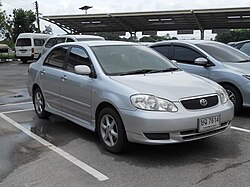
Toyota corolla 2003-2008 Spare Parts & Pricing
The 2003–2008 Toyota Corolla, encompassing the E120 and E130 generations, stands as a cornerstone of reliability and practicality in the compact car segment. Globally renowned for its straightforward mechanics, extensive parts availability, and consistently low running costs, it remains a highly sought-after used vehicle. This ninth-generation Corolla was produced in various body styles, including sedan, hatchback, and wagon, with specific market variants extending its production well into the mid-2000s. While Auto-Data.net [5] lists the E120/E130 sedan generation as primarily 2001–2006, facelifted models and certain derivatives continued in some regions through 2007 and 2008, leading to its common identification as a 2003–2008 model range. Most versions are front-wheel drive, powered by efficient gasoline four-cylinder engines, with diesel options available in certain markets. Common engine choices include the 1.4L, 1.6L, and 1.8L gasoline variants, often paired with a 5-speed manual or a 4-speed automatic transmission. For many buyers, the 1.6L gasoline engine offers an optimal balance of economy, widespread availability, and ease of service. You can explore specific engine and transmission details for the Toyota Corolla IX (E120, E130) Facelift 1.6 MT 110 HP (2003 - 2007) [8] to understand the common configurations. The platform’s shared components with other Toyota models of the era, such as the Matrix and Pontiac Vibe in North America, contribute significantly to its robust parts ecosystem. This interconnectedness ensures that repair parts remain accessible and affordable, a key factor in the Corolla's enduring popularity in import-heavy markets worldwide. While the Corolla's reputation for durability is well-deserved, ownership of a vehicle from this generation primarily involves managing age-related wear rather than systemic design flaws. Potential owners should be mindful of common issues such as suspension component degradation, cooling system maintenance, electrical system integrity, and the critical exposure to airbag-related recalls. For instance, Toyota issued a significant 'do-not-drive' advisory for certain 2003–2004 Corolla vehicles in the U.S. due to defective Takata airbag inflators, a critical safety concern that can be checked using a VIN lookup tool on sites like the NHTSA [3]. Understanding these common issues and maintenance requirements is crucial for prospective owners looking to maximize the value and longevity of their 2003-2008 Toyota Corolla. For more specific information on common issues and solutions, you can consult resources like CarComplaints.com [4]. For a comprehensive look at common issues for this generation, visit our guide on [Toyota Corolla E120/E130 common problems](https://naira.autos/problems/toyota-corolla-2003-2008).
Electrical
| Part | Price Range | Availability | Interval |
|---|---|---|---|
| Alternator Essential for charging the battery and powering electrical systems. Many reliable aftermarket options are available, often providing a cost-effective alternative to OEM parts. Replacement is typically straightforward. | $90 – $188 | Widespread aftermarket and OEM | 100,000–160,000 miles |
| Starter motor Engages the flywheel to crank the engine. Symptoms of failure include a clicking sound or no crank. Aftermarket units are widely available and generally reliable, offering good value. | $80 – $240 | Widespread aftermarket and OEM | 120,000–180,000 miles |
Suspension
| Part | Price Range | Availability | Interval |
|---|---|---|---|
| Front strut / shock set Common wear items, particularly in regions with rough roads, affecting ride comfort, handling, and tire wear. Aftermarket sets are popular for balancing cost and performance. Alignment is required after replacement. | $70 – $483 | Widespread aftermarket and OEM | 60,000–100,000 miles on rough roads |
| Control arm / bushings Worn bushings cause clunking noises, poor handling, and uneven tire wear. Complete control arm replacement can sometimes be more cost-effective than pressing in new bushings, especially for older vehicles. | $40 – $220 | Widespread aftermarket and OEM | Variable, bushings 60,000-100,000 miles |
Drivetrain
| Part | Price Range | Availability | Interval |
|---|---|---|---|
| Manual transmission While robust, neglected fluid changes or harsh driving can lead to wear. Used JDM units are a common and often economical replacement option, but verify seller reputation and warranty for peace of mind. | $250 – $799 | Used JDM units and remanufactured options | Highly maintenance-dependent, often 150,000+ miles with proper fluid service |
Brakes
| Part | Price Range | Availability | Interval |
|---|---|---|---|
| Brake pads Critical safety component requiring regular inspection. Both OEM and quality aftermarket pads offer excellent stopping power and durability. Consider ceramic pads for less dust and noise. | $25 – $80 | Widespread aftermarket and OEM | 25,000–60,000 miles (varies by driving style) |
| Brake rotors Work in conjunction with brake pads. Should be inspected for wear, scoring, or warping during every brake service. Quality rotors ensure consistent and safe braking performance. | $30 – $120 | Widespread aftermarket and OEM | Typically with every 1-2 sets of pads, or when worn/warped |
Cooling
| Part | Price Range | Availability | Interval |
|---|---|---|---|
| Water pump Crucial for circulating coolant and preventing engine overheating. A failing pump can lead to severe engine damage. It's often replaced as part of comprehensive cooling system maintenance. | $35 – $160 | Widespread aftermarket and OEM | 90,000–150,000 miles |
| Radiator Dissipates heat from the engine's coolant. Age and corrosion can cause leaks or blockages, leading to overheating. Regular coolant flushes help extend its lifespan. | $60 – $220 | Widespread aftermarket and OEM | Typically 100,000+ miles, dependent on coolant maintenance |
Ignition
| Part | Price Range | Availability | Interval |
|---|---|---|---|
| Ignition coil One coil per cylinder, providing spark to the spark plugs. Failure leads to misfires and a check engine light. While aftermarket coils exist, OEM or reputable brands are often recommended for optimal performance. | $20 – $85 | Widespread aftermarket and OEM | Highly variable, often 60,000-100,000 miles |
| Spark plugs Vital for engine combustion. Using the correct type (e.g., iridium for longer life) and ensuring proper gapping is crucial for optimal engine performance and fuel efficiency. Replace as a set. | $10 – $40 | Widespread aftermarket and OEM | 30,000–100,000 miles (depends on type) |
Sensors
| Part | Price Range | Availability | Interval |
|---|---|---|---|
| Oxygen sensor Monitors exhaust gases to optimize fuel mixture and emissions. A faulty sensor can cause poor fuel economy and trigger a check engine light. OEM sensors are often preferred for accurate readings. | $25 – $140 | Widespread aftermarket and OEM | 60,000–100,000 miles |
Fuel System
| Part | Price Range | Availability | Interval |
|---|---|---|---|
| Fuel pump Responsible for delivering fuel from the tank to the engine. Symptoms of failure include hard starting, stalling, or a whining noise from the tank. Quality aftermarket units are available and generally reliable. | $60 – $220 | Widespread aftermarket and OEM | 100,000–150,000 miles |
Steering
| Part | Price Range | Availability | Interval |
|---|---|---|---|
| Steering rack / tie rods Tie rods are common wear items affecting steering precision. The steering rack typically lasts longer but can leak or develop play. Aftermarket tie rods are common, but OEM racks are often preferred for critical steering components. | $80 – $600 | Widespread aftermarket and OEM | Tie rods 60,000-100,000 miles, rack 150,000+ miles |
Body/Lighting
| Part | Price Range | Availability | Interval |
|---|---|---|---|
| Headlight assembly Replaced primarily due to collision damage or significant lens hazing affecting light output. Aftermarket headlight assemblies are readily available and provide a good balance of cost and functionality. | $45 – $180 | Widespread aftermarket and OEM | As needed for damage or severe hazing |
Body
| Part | Price Range | Availability | Interval |
|---|---|---|---|
| Mirror assembly Typically replaced due to impact damage. Aftermarket mirror assemblies offer a cost-effective solution for restoring appearance and functionality. Ensure compatibility with electrical features like heating or power adjustment. | $25 – $120 | Widespread aftermarket and OEM | As needed for damage |
Filters
| Part | Price Range | Availability | Interval |
|---|---|---|---|
| Air filter Protects the engine from dust and debris. Regular replacement improves engine breathing, performance, and fuel economy. It's a simple and inexpensive DIY maintenance item. | $5 – $25 | Widespread aftermarket and OEM | 10,000–15,000 miles or annually |
| Cabin filter Filters pollen, dust, and pollutants from the air entering the vehicle's cabin, enhancing air quality. Easy to replace for most owners, improving HVAC performance and reducing odors. | $7 – $25 | Widespread aftermarket and OEM | 12,000–15,000 miles or annually |
Buying Guide
The 2003–2008 Toyota Corolla (E120/E130) is renowned for its durability, but like any aging vehicle, specific issues arise due to age, mileage, and maintenance history. Understanding these common problems is key to a smart purchase and cost-effective ownership. For a deeper dive into the cost of ownership, consider using a [cost of ownership calculator](https://naira.autos/tools/cost-of-ownership).
### Common Problems and Solutions
1. **Airbag Recall Exposure (Takata Inflators)**: * **Symptoms**: Warning lights, recall notices, or no obvious symptoms until a recall is discovered. Toyota issued a significant 'do-not-drive' advisory for certain 2003–2004 Corolla vehicles in the U.S. due to defective Takata airbag inflators [2]. * **Causes**: Defective Takata inflators can rupture during deployment, especially with age and environmental exposure. This is a critical safety defect, not a wear item. * **Diagnosis**: Crucially, check the VIN using the manufacturer or NHTSA recall lookup tools [3]. * **Repair**: This is a dealer-performed recall repair at no cost. Do not attempt DIY fixes. * **Severity**: Critical.
2. **Excessive Oil Consumption and Engine Wear**: * **Symptoms**: Low oil level between changes, blue smoke, noisy engine, sludge, or knocking. CarComplaints.com [13] shows recurring engine-related complaints for the 2003 Corolla, including oil sludge and excessive consumption. * **Causes**: Worn piston rings, PCV system issues, or neglected oil changes leading to sludge. * **Diagnosis**: Regular oil level checks, spark plug inspection, compression/leak-down tests, and visual inspection for sludge. * **Repair**: Consistent, short-interval oil changes, PCV valve replacement, and in severe cases, engine rebuild or replacement. * **Severity**: Medium to High, depending on how long it's ignored.
3. **Transmission Wear or Failure**: * **Symptoms**: Slipping, delayed shifts, harsh engagement, fluid leaks, whining. CarComplaints.com [4] highlights transmission failure as a major issue, especially for the 2003 model year. * **Causes**: Old or incorrect fluid, overheating, worn solenoids, or high-mileage clutch wear. * **Diagnosis**: Check ATF color/odor, scan for codes, road test for symptoms, and inspect for leaks. * **Repair**: Fluid and filter service, leak repair, solenoid replacement, or full rebuild/replacement. * **Severity**: High if slipping; low if caught early.
4. **Accelerator/Throttle Issues**: * **Symptoms**: Unintended acceleration, pedal sticking, throttle hesitation. CarComplaints.com [13] notes various speed control and accelerator pedal complaints for the 2003 Corolla. * **Causes**: Floor mat interference, dirty throttle body, cable issues, or sensor faults. * **Diagnosis**: Inspect pedal travel, mat clearance, throttle body cleanliness, and scan for codes. * **Repair**: Throttle body cleaning, mat replacement, sensor diagnosis, or cable replacement. * **Severity**: Medium to High, due to safety implications.
5. **Suspension and Steering Wear**: * **Symptoms**: Clunks over bumps, wandering, uneven tire wear, loose steering. This is a very common age-related issue, particularly on rough roads [14]. * **Causes**: Worn struts, ball joints, tie rods, control arm bushings, and stabilizer links. * **Diagnosis**: Lift inspection, wheel play tests, bounce test, and tire wear pattern review. * **Repair**: Replace worn components, followed by a wheel alignment. * **Severity**: Medium, becoming high if steering looseness is severe.
### Parts Pricing and Availability
One of the Corolla’s greatest strengths is its extensive aftermarket parts ecosystem. For most service and suspension items, buyers can choose from OEM, quality aftermarket, and even used parts. This flexibility is particularly beneficial in regions where importing OEM parts can be costly due to shipping and duties. For a detailed breakdown of parts prices, including USD and NGN estimates, refer to our [Toyota Corolla parts price guide](https://naira.autos/prices/toyota-corolla-2003-2008).
For major components like engine and transmission assemblies, importing used JDM (Japanese Domestic Market) units often presents a more economical solution than rebuilding a severely neglected original unit. However, the cheapest used part isn't always the best value; consider installation quality, warranty, and seller reputation carefully. Sources like JDM Tier 1 Engines [9] offer such units. Many parts are broadly available from online retailers globally, as well as local auto parts stores and specialized importers.
### Maintenance for Longevity
Toyota's reputation for durability with the Corolla is built on consistent, preventative maintenance. Adhering to a robust service schedule for oil changes, cooling system health, transmission service, and suspension inspections is the primary differentiator between an affordable and an expensive ownership experience.
**Recommended Service Rhythm**: * **Engine Oil & Filter**: Every 5,000–7,500 miles (8,000–12,000 km), especially if any oil consumption is noted. * **Transmission Fluid**: Inspect regularly and service sooner than 'lifetime' claims, particularly for high-mileage automatics. * **Coolant**: Replace on schedule and proactively check for leaks from the radiator, hoses, and water pump. * **Brakes**: Inspect at every tire rotation or at least annually. * **Suspension/Steering**: Inspect annually or whenever unusual noises or tire wear patterns appear.
**Expected Component Life**: * **Alternator**: 100,000–160,000 miles (160,000–257,000 km). * **Starter**: 120,000–180,000 miles (193,000–290,000 km). * **Struts/Shocks**: 60,000–100,000 miles (96,000–160,000 km), especially on rough roads. * **Water Pump**: 90,000–150,000 miles (145,000–241,000 km). * **Automatic Transmission**: Highly maintenance-dependent, often 150,000+ miles (241,000+ km) with proper fluid service. * **Engine**: Can last well over 200,000 miles (320,000 km) with diligent oil control, but neglect of oil consumption dramatically shortens its life.
### Ownership Insights and Buying Advice
The Corolla's reliability is deserved, but for a vehicle of this age, its actual condition far outweighs brand loyalty. A well-maintained 2003–2008 Corolla can be one of the most economical cars to own, while a neglected one can lead to a steady stream of suspension, cooling, and engine-related expenses [13]. The most significant high-cost surprises typically involve engine or transmission replacement, or unresolved airbag recall issues [2]. Beyond these, expect to address age-appropriate wear items such as engine mounts, bushings, struts, various sensors, batteries, and potentially the alternator or starter. For a more general overview of the model, you can visit our [Toyota Corolla vehicle page](https://naira.autos/vehicles/toyota/corolla).
When buying, especially in markets reliant on imported used vehicles, prioritize cars with a complete service history and documented evidence of recall completion, particularly for 2003–2004 models. A pre-purchase inspection by a trusted mechanic is invaluable to identify potential issues like gearbox noise, excessive oil burning, or hidden accident damage. Utilize tools like a [VIN Checker](https://naira.autos/tools/vin-checker) to verify recall status and vehicle history before finalizing any purchase.
Where to Buy Parts
Frequently Asked Questions
Is the 2007 Toyota Corolla reliable?+
Yes, the 2007 Toyota Corolla is generally considered reliable if it has received proper maintenance throughout its life. Given its age, potential buyers should meticulously inspect for common age-related issues such as oil consumption, suspension component wear, cooling system condition, and transmission performance. These areas are the most likely to incur significant ownership costs on an older Corolla, so a thorough pre-purchase inspection is highly recommended to ensure continued reliability.
Is the 2008 Toyota Corolla better than the 2003 Corolla?+
Generally, the 2008 Toyota Corolla may offer a slight advantage over the 2003 model, primarily due to being newer and potentially having fewer accumulated miles or better recall awareness. Owner-reported data, like that on CarComplaints.com [13], indicates more complaint activity for the 2003 model, particularly concerning engine and transmission issues. However, the car's individual condition and maintenance history remain far more critical than the model year alone when evaluating an older vehicle.
What is the biggest problem with the 2003–2008 Corolla?+
The most significant challenge for the 2003–2008 Corolla is not a single design flaw, but rather the cumulative effect of age and neglect. Recurring issues in owner complaint data include engine problems (especially oil consumption), transmission concerns, and isolated speed-control complaints. Furthermore, the critical Takata airbag recall remains a serious safety consideration for certain early-2000s models [2]. Thorough pre-purchase inspection and VIN-based recall checks are essential.
How much should I budget to maintain one?+
A well-maintained 2003–2008 Corolla remains relatively inexpensive to maintain. A realistic annual budget should cover routine oil and filter changes, brake wear, and some eventual suspension work. Additionally, it's prudent to set aside funds for potential sensor replacements or charging system repairs. In many global markets, budgeting a few hundred USD annually for routine care is a good starting point, with more allocated for unforeseen major repairs. The equivalent in other currencies can vary significantly based on parts import costs.
Which Corolla years should I search for specifically?+
When searching for a 2003–2008 Toyota Corolla, the 2003, 2007, and 2008 model years often draw particular attention due to specific problem visibility or high buyer interest. It's crucial for buyers comparing these years to perform a VIN-based recall status check, especially for 2003 models affected by airbag recalls [3]. Additionally, a comprehensive inspection focusing on engine oil consumption, transmission smoothness, and suspension wear is advisable before making a purchase decision.
Also worth reading
Toyota corolla 2003-2008 Common Issues