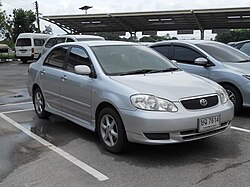
toyota corolla 2003-2008 Common Problems & Issues
The 2003–2008 Toyota Corolla stands out as one of the most reliable and sensible used-car choices in the compact vehicle segment. Its appeal stems from straightforward mechanical designs, extensive parts availability, and generally low running costs. For this particular generation, the primary ownership concerns are not exotic or catastrophic failures, but rather issues related to age-related wear, with particular attention to the suspension system, cooling components, electrical systems, and exposure to airbag-related recalls. This ninth-generation Corolla was marketed globally, offered in various body styles including sedan, hatchback, and wagon, alongside market-specific variants. Production spanned the early to mid-2000s, depending on the body style and the specific market. While some data sources list the E120/E130 sedan generation as concluding around 2006, facelifted versions and certain derivatives continued in some markets into 2007–2008. This extended production is why buyers commonly encounter cars from 2003–2008 under this generation label. Most versions of the Corolla from this era feature front-wheel drive, powered predominantly by gasoline four-cylinder engines in the core range, with diesel options available in select regions. Common engine sizes include 1.4L, 1.6L, and 1.8L variants, depending on the country. A 1.6L engine paired with either an automatic or manual transmission typically represents the mainstream trim levels, with 1.8L models appearing in certain markets. The platform shared numerous components with other Toyota models of the period, notably the Matrix and Pontiac Vibe in North America, as well as other vehicles built on Toyota's compact architecture. This shared parts ecosystem is a significant factor in why repair parts remain readily available and why the Corolla has maintained its popularity in many import-heavy markets worldwide. For buyers, the most relevant powertrain options are usually the 1.4L and 1.6L gasoline engines found in many export markets, complemented by 1.8L variants available in some regions and trim lines. Transmission choices typically include a 5-speed manual and a 4-speed automatic, with some market-specific robotized manual variants offered in certain territories. From a practical buying perspective, the 1.6L gasoline versions generally offer the most balanced blend of fuel economy, widespread availability, and ease of service. Manual 1.8L examples can be an attractive option for those seeking a bit more performance, though the overall condition of the vehicle is a more critical factor than badge or displacement for cars of this age.
3
Critical
2
Moderate
0
Minor
Known Issues
Airbag recall exposure, especially Takata inflators
CriticalOwners may experience warning lights, receive recall notices, or have disabled or potentially dangerous airbags, though sometimes there are no obvious symptoms until a recall is discovered. Toyota issued an urgent 'do-not-drive' advisory for certain 2003–2004 Corolla vehicles in the U.S. related to Takata airbag recalls. The root cause is defective Takata inflators which can rupture during deployment, particularly as vehicles age and accumulate exposure to environmental factors. This is a safety defect and a recall issue, not a normal wear item. To diagnose, check the vehicle's VIN in the manufacturer or national highway safety administration recall lookup to confirm whether the airbag campaign is complete. There are no DIY fixes for this; it is not a repair to attempt at home. A dealer or authorized repairer will replace the inflator or airbag module at no cost when covered by the recall. If not covered, out-of-pocket replacement in the aftermarket is generally not advisable for safety-critical reasons.
Excessive oil consumption and oil-related engine wear
CriticalCommon symptoms include a consistently low oil level between changes, blue smoke from the exhaust in some cases, a noisy top end, sludge formation, knocking sounds, or eventual engine seizure if oil levels are neglected. Owner complaints for the 2003 Corolla specifically mention issues like oil sludge buildup, engine seizure, knocking, and excessive oil consumption. The primary causes are worn piston rings, issues with the PCV (Positive Crankcase Ventilation) system, neglected oil changes, sludge formation resulting from extended service intervals, and general age-related internal wear. On older Toyota four-cylinder engines, a diligent maintenance history is extremely important. Diagnosis involves verifying the oil level, inspecting for external leaks, examining spark plugs for oil fouling, performing compression or leak-down tests, and checking for sludge under the oil cap and valve cover. DIY fixes include consistent short-interval oil changes using the correct viscosity oil, PCV valve replacement, and actively monitoring oil consumption between fills. Professional repairs might involve compression diagnosis, PCV system service, valve cover gasket replacement, and in the worst cases, a major engine rebuild or complete engine replacement depending on the market and severity.
Transmission wear or failure
CriticalOwners may experience symptoms such as the transmission slipping, delayed shifts, harsh engagement, fluid leaks, whining noises, shuddering during acceleration, or complete transmission failure. Transmission failure is identified as one of the major problem categories for the Corolla, with the 2003 model year appearing among the worse years for these complaints. Causes often include old or degraded fluid, overheating, neglected maintenance, worn solenoids, wear in the valve body, and high-mileage clutch wear in manual transmissions. For automatics, excessively long fluid service intervals are frequently a contributing factor. Diagnosis involves checking the automatic transmission fluid (ATF) color and odor, scanning for transmission-specific diagnostic trouble codes, performing a road test to detect slip or flare, and inspecting for leaks around seals and cooler lines. DIY fixes include performing a fluid and filter service where applicable, repairing any detected leaks, and ensuring that the correct fluid specification is always used. Professional repair options range from solenoid replacement, valve body work, a complete transmission rebuild, or even a full replacement transmission.
Accelerator, throttle, and unintended acceleration complaints
ModerateReported symptoms include an unintended rise in engine speed, a sticking accelerator pedal, throttle hesitation, or general speed-control complaints. Owner reports list vehicle speed control and accelerator pedal complaints on the 2003 Corolla. Potential causes include interference from floor mats, a dirty throttle body, cable issues on some specific versions, sensor faults, or problems with the driver-interface. In older vehicles, many cases are attributed to mechanical contamination rather than electronic failure. Diagnosis involves inspecting the pedal’s full range of travel, checking floor mat clearance, assessing the cleanliness of the throttle body, and scanning for any throttle-related diagnostic codes. DIY fixes can include cleaning the throttle body, replacing damaged floor mats, checking the pedal’s return action, and inspecting accelerator cables if the vehicle is equipped with one. Professional repair may involve sensor diagnosis, cable replacement, thorough throttle body service, or replacement of the entire pedal assembly.
Suspension and steering wear
ModerateCommon symptoms include clunking noises when driving over bumps, the vehicle wandering or drifting, uneven tire wear, vibrations felt through the steering wheel, loose steering feel, or general noise emanating from the struts and links. This is one of the most frequently observed age-related service categories for a Corolla of this vintage, especially in regions with rough road conditions. The primary causes are worn struts, ball joints, tie rods, control-arm bushings, and stabilizer links. Heavy use and poor road surfaces significantly accelerate this wear. Diagnosis involves a lifted inspection of the undercarriage, performing a play test on the wheels, a bounce test of the suspension, reviewing tire wear patterns, and conducting a road test. Some basic items like stabilizer links and simple inspections can be done at home, but a professional wheel alignment should always follow any major suspension work. Professional repair entails replacing the worn suspension and steering components, followed by a necessary wheel alignment.
What to Check Before Buying
The Toyota Corolla’s reputation for reliability is well-deserved, but for a generation this old, the vehicle's actual condition matters far more than brand loyalty alone. A 2003–2008 Corolla that has been well-maintained can still be one of the most economical cars to own. Conversely, a neglected one can quickly become a source of continuous expenses related to suspension, cooling, and engine problems.
The most significant high-cost surprises typically involve major engine replacement, transmission replacement, and the risk associated with unresolved airbag recalls if the specific vehicle was never repaired. Additionally, owners should anticipate replacing wear items that are simply age-appropriate for vehicles of this vintage. These include engine mounts, suspension bushings, struts, various sensors, batteries, and potentially the alternator or starter motor.
The Corolla’s strongest advantage is the extensive aftermarket ecosystem for parts. For suspension components and routine service items, buyers typically have a choice among OEM (Original Equipment Manufacturer), quality aftermarket, and more affordable used parts. This flexibility is particularly beneficial in many markets where importing OEM parts can be expensive due to shipping and duties. For major components like engine and transmission assemblies, importing used units from markets like Japan (JDM) often makes more economic sense than attempting to rebuild a severely neglected engine or automatic gearbox. However, it is crucial to remember that the cheapest used unit is not always the most cost-effective long-term decision; installation quality and warranty coverage are vital considerations.
When sourcing a Corolla, options include local used-car dealers, independent importers, auction exporters, and verified online marketplaces. For buyers in markets with high used car import activity, it is highly recommended to prioritize vehicles with a complete service history and clear evidence that any applicable safety recalls, especially for 2003–2004 models, have been completed. It is always a smart move to pay for a pre-purchase inspection and actively avoid cars that exhibit gearbox noise, excessive oil burning, or unaddressed accident damage.
Where to Buy Parts
Frequently Asked Questions
Is the 2007 Toyota Corolla reliable?+
Yes, the 2007 Toyota Corolla is generally considered reliable, provided it has been maintained properly throughout its life. However, at this age and mileage, the individual car's condition is more important than the brand name alone. Prospective buyers should thoroughly inspect for oil consumption, suspension wear, the condition of the cooling system, and the smoothness of transmission behavior. These are the most common issues likely to lead to ownership costs on an older Corolla.
Is the 2008 Toyota Corolla better than the 2003 Corolla?+
Generally, yes, the 2008 Toyota Corolla tends to be marginally better than the 2003 model, but this is only true if its actual condition is superior. The 2003 Corolla shows a higher volume of owner-reported complaints in available data, particularly concerning engine and transmission-related issues. Later model years, such as 2008, may have benefited from different usage patterns over their lifespan and potentially greater awareness and completion of earlier recalls.
What is the biggest problem with the 2003–2008 Corolla?+
The biggest problem with the 2003–2008 Toyota Corolla is not a single, universal defect, but rather the combination of the vehicle's age and any past neglect. According to owner complaint data, recurring themes include engine issues, transmission complaints, and concerns related to speed control. Additionally, the risk of unaddressed safety recalls, particularly the Takata airbag campaigns for certain early 2000s models, remains an important consideration for buyers.
How much should I budget to maintain one?+
A well-maintained Toyota Corolla remains inexpensive to run, but a realistic annual maintenance budget should account for routine oil service, brake wear, some eventual suspension work, and the potential for sensor or charging-system repairs. In U.S. dollar terms, many owners might budget a few hundred dollars per year for routine care, with significantly more allocated for any major repairs. In other markets, the equivalent costs can increase rapidly if parts need to be imported.
Which Corolla years should I search for specifically?+
The 2003, 2007, and 2008 Toyota Corolla model years are often worth separate searches because there is high specific interest in these years, and recall or problem visibility can vary. When comparing these years, a buyer should always verify the VIN-based recall status for each vehicle. Crucially, conduct a thorough inspection of the engine's oil behavior, the transmission's smoothness, and the overall condition of the suspension before making a purchase decision.
Also worth reading
toyota corolla 2003-2008 Spare Parts & Pricing