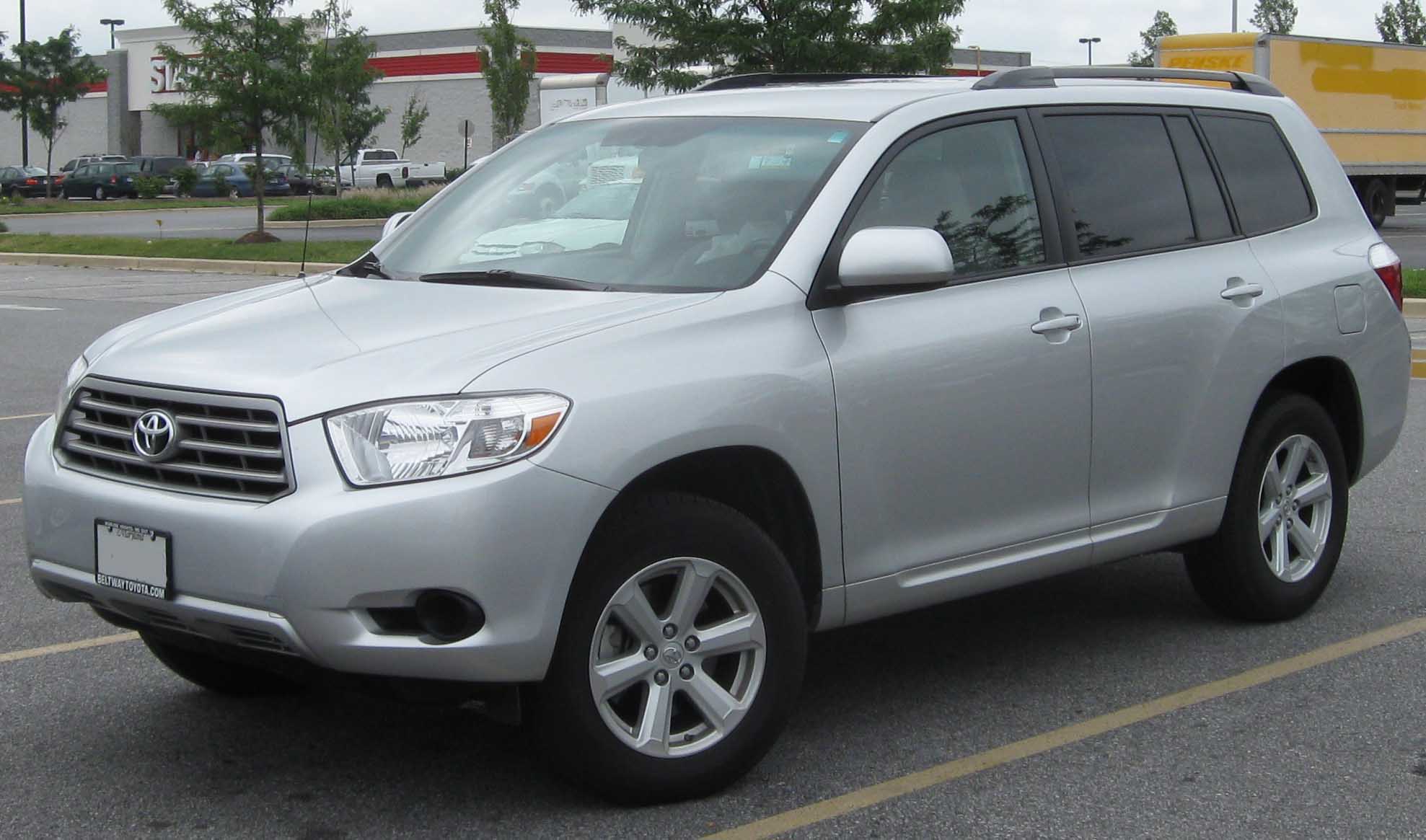
toyota highlander 2008-2013 Common Problems & Issues
The second-generation Toyota Highlander, codenamed XU40, was produced from late 2007 for the 2008 model year through 2013. This generation marked a significant evolution with a larger platform, improved car-like handling, and expanded powertrain options, including a hybrid variant. Globally, it offered a 2.7L 4-cylinder engine and a more powerful 3.5L V6. In the US market, trim levels ranged from Base to Limited, with many units imported to Nigeria as used XLE or Limited hybrids and V6 petrol models. The XU40 shares its mid-size SUV platform with the Toyota Sienna and has component overlap with the Lexus RX350. While generally regarded as reliable, specific issues can arise, particularly with the V6 engine, ignition system, brakes, and certain steering components. Understanding these common problems, along with their symptoms, causes, and repair costs, is crucial for potential buyers and current owners looking to maintain their Highlander effectively. This guide provides a comprehensive overview of the XU40's known weaknesses, essential maintenance schedules, and parts pricing in both USD and NGN to aid in informed decision-making.
1
Critical
4
Moderate
0
Minor
Known Issues
Oil Consumption (V6 2GR-FE Engine)
ModerateOwners may notice the oil level dropping faster than normal, potentially exceeding one quart per 1,000 miles. In some cases, minor blue smoke might appear from the exhaust under heavy load, or a low oil warning light could illuminate if the level isn't monitored. The primary cause is worn piston rings and/or ring lands, particularly in pre-2010 builds of the 2GR-FE V6 engine. Increased oil passage wear over time can also contribute, with some units burning more oil after 80,000 to 100,000 miles. Diagnosis involves monitoring oil levels regularly, performing compression and leak-down tests to confirm ring wear, and checking for external leaks. There is no simple DIY fix for internal ring wear; mitigation includes using high-quality synthetic oil, shortening oil change intervals to 5,000 miles, and consistent oil level checks. Professional repairs involve piston ring replacement or a full engine overhaul, with costs ranging from $2,500 to $4,500 USD (₦4.0M–₦7.2M). This issue is classified as moderate to high severity due to the potential for engine damage if ignored and is considered a widespread complaint or known design weakness.
VVT-i Actuator/Solenoid Oil Leak & Rattle
ModerateA common symptom is a rattling or ticking noise that is most noticeable on cold starts, often emanating from the timing cover area. This noise may lessen or disappear as the engine warms up. If the Variable Valve Timing (VVT-i) system's timing is significantly affected, a rough idle or minor misfire could occur. The root cause is typically leaking seals within the VVT-i actuator or solenoid, which reduces hydraulic pressure needed for proper valve timing control. This issue commonly appears after approximately 100,000 miles or 160,000 kilometers. Diagnosis involves listening for the cold start rattle, confirming its source with a mechanic, and inspecting for oil leaks around the timing cover. VVT-related diagnostic trouble codes, such as P1349, may also be present. While replacing VVT-i solenoids can be a DIY task for some, actuator replacement is more complex. Professional repairs involve replacing the VVT-i actuator and/or solenoids, and potentially resealing the timing cover if oil leakage is significant. The estimated cost for parts and labor ranges from $400 to $900 USD (₦640,000–₦1.44M). This is considered a moderate severity issue, primarily causing noise and potential timing problems but not usually catastrophic failure.
Ignition Coil Failures & Misfires
ModerateOwners may experience a rough idle, hesitation during acceleration, or noticeable misfires, particularly under load. A Check Engine Light (CEL) often accompanies these symptoms, with diagnostic codes ranging from P0300 to P0306, indicating a misfire in one or more cylinders. Reduced fuel economy can also be a consequence. The most common cause is the degradation of ignition coils, typically occurring between 80,000 and 120,000 miles due to age and heat exposure. Diagnosis involves scanning for misfire codes to identify the affected cylinder(s) and swapping coils between cylinders to pinpoint the faulty unit. Inspecting the coil boots for cracks or carbon tracking is also recommended. DIY fixes involve replacing the failed coil(s) with quality OEM or aftermarket parts and refreshing the coil boots. Professional repairs are similar. The cost for a single OEM coil is $80–$130 USD (₦128,000–₦208,000), with labor adding $80–$150 USD (₦128,000–₦240,000). Replacing all six coils might cost $400–$900 USD (₦640,000–₦1.44M). This is a low to moderate severity issue, primarily affecting drivability.
Brake System Complaints (Service Brakes)
ModerateCommon symptoms include brake pedal pulsation, unusual noises during braking, or a reduced sense of braking effectiveness. In some instances, the Anti-lock Braking System (ABS) warning light may illuminate. National Highway Traffic Safety Administration (NHTSA) data consistently lists 'Service brakes' as a top complaint category for various Highlander years, including the 2008–2013 XU40 models. Causes can range from normal wear of brake pads and rotors to rotor warping, caliper issues, or problems with the master cylinder. Certain years, particularly 2008–2010, have had recalls related to the vacuum brake system and master cylinder. Diagnosis involves a visual inspection of brake pads, rotors, and calipers, checking for ABS codes, assessing brake fluid condition, and verifying any outstanding recall status. DIY fixes include replacing brake pads and resurfacing or replacing rotors. Professional repairs involve a full brake service, including pad and rotor replacement, caliper inspection, and brake fluid flush. Some recalls may offer free replacements at a dealership. A complete brake service typically costs $550–$950 USD (₦880,000–₦1.52M). This is a moderate to high severity issue due to its safety-critical nature.
Steering Column Separation Concerns
CriticalOwners might report a feeling of looseness in the steering wheel, as if it's detached from the column. In rare instances, there have been reports of the steering wheel separating or becoming detached, particularly in crash scenarios or during repair work. NHTSA investigated approximately 708,000 Highlanders from 2008–2013 for upper steering column separation. Although the investigation was closed in 2024 without a recall, citing rarity and that damage was often linked to accidents, the potential concern remains. The suspected cause is a possible manufacturing defect in the upper steering column joint, potentially exacerbated by crash damage or improper repair procedures. This is not a common issue encountered during daily driving but represents a significant safety concern in specific situations. Diagnosis involves a visual inspection of the steering column joint and checking NHTSA investigation status. DIY fixes are not recommended due to the safety-critical nature of this component. Professional repairs involve steering column replacement if a defect or damage is identified. Estimated costs for replacement parts and labor range from $900 to $1,700 USD (₦1.44M–₦2.72M). This is a high severity issue due to the risk of losing steering control if failure occurs, though it is rare in normal use.
What to Check Before Buying
The 2008-2013 Toyota Highlander (XU40) is generally considered a reliable SUV, building on Toyota's reputation for durability. However, like any vehicle, it has specific common problems that owners should be aware of. Proactive maintenance and understanding these potential issues can save significant time and money.
For the V6 2GR-FE engine, oil consumption is a notable concern, particularly in models produced before 2010 and often appearing after 80,000 miles. If you own or are considering purchasing a V6 model, regularly checking the oil level (every 1-2 weeks) is paramount. Using a high-quality synthetic oil and adhering to a 5,000-mile oil change interval can help mitigate this issue. If consumption becomes excessive, a professional diagnosis for worn piston rings or other internal issues is necessary, which can be an expensive repair, potentially costing upwards of $4,500 USD (₦7.2M). Ignoring this can lead to severe engine damage.
The VVT-i system, responsible for optimizing valve timing, can also present issues. A common symptom is a rattling or ticking noise on cold starts, usually appearing after 100,000 miles, often due to leaking seals in the actuators or solenoids. While not immediately catastrophic, it can affect engine performance and potentially lead to more significant timing-related problems if left unaddressed. Prompt replacement of the affected components, costing around $400-$900 USD (₦640,000–₦1.44M), is advisable.
Ignition coils are another wear item that commonly fails between 80,000 and 120,000 miles, leading to rough idling, misfires, and a check engine light. Replacing individual failed coils is straightforward, but it's often wise to replace them in sets, especially if multiple cylinders show codes. A full set replacement can cost between $400-$900 USD (₦640,000–₦1.44M).
Brake system issues, including pulsation and reduced effectiveness, are frequently reported. This can stem from warped rotors, worn pads, or caliper problems. Some earlier models (2008-2010) even had recalls related to the brake system. Regular inspections and timely replacement of pads and rotors are essential for safety and optimal performance. A full brake service can range from $550-$950 USD (₦880,000–₦1.52M).
A more serious, though rarer, concern is related to the steering column. While not a common daily driving issue, NHTSA investigated potential separation risks. If you notice any looseness or unusual behavior in the steering, it should be inspected immediately by a qualified mechanic, as this is a safety-critical component. Replacement can be costly, estimated at $900-$1,700 USD (₦1.44M–₦2.72M).
Regarding maintenance, the factory schedule is a good starting point, but owners in demanding climates like Nigeria should consider more frequent intervals for certain items. For instance, oil changes every 5,000 miles (8,000 km) are highly recommended, especially for V6 models prone to oil consumption. Transmission fluid changes every 60,000 miles are also advised, particularly if the vehicle is used for towing or in heavy city traffic. Coolant and brake fluid should be flushed every 2-3 years, sooner if conditions are harsh, to prevent corrosion and maintain performance.
When purchasing a used Highlander XU40, especially an imported unit, always prioritize vehicles with a complete and verifiable service history. Pay close attention to the model year; 2008, being the first year of the generation, tends to have more reported issues than later years like 2010-2013. Use available tools like VIN checkers to ascertain recall status and known issues. Thoroughly inspect the vehicle for signs of the common problems mentioned, particularly oil leaks or consumption on the V6, any VVT-i rattle, and the condition of the brakes and steering.
For owners in Nigeria, sourcing parts requires careful consideration. While OEM parts offer the best quality, they are often expensive. Reputable aftermarket brands can provide a good balance of quality and cost. Used parts from reliable sources are also an option for certain components, but always verify their condition. The price differences between USD and NGN should be factored in, with local market prices often reflecting import duties and availability. For example, a routine oil change might cost ₦160,000-₦240,000 at a shop, while major repairs like an engine overhaul can run into millions of Naira.
Ultimately, the Toyota Highlander XU40 can be a dependable and comfortable SUV for many years, provided its owner is diligent with maintenance, addresses potential issues promptly, and understands the specific challenges associated with its model year and engine type. Regular inspections, adherence to a robust maintenance schedule, and using quality parts and fluids are key to maximizing its longevity and reliability.
Where to Buy Parts
Frequently Asked Questions
Is the 2008 Toyota Highlander reliable compared to later XU40 years?+
The 2008 model, being the first year of the XU40 generation, tends to have more reported complaints than subsequent years like 2009-2013. Issues such as engine problems, brakes, and airbags were more frequent. While many 2008 Highlanders remain reliable if well-maintained, buyers should be cautious of early-production quirks and prioritize examples with complete service histories and evidence of completed recalls. Later models generally exhibit better reliability.
What is the main problem with the 2010 Toyota Highlander V6 engine?+
The primary concern for the 2010 Highlander's 3.5L 2GR-FE V6 is oil consumption, often appearing around 80,000-120,000 miles due to worn piston rings. This requires diligent oil level monitoring and potentially costly repairs. Other issues like VVT-i actuator rattles and ignition coil failures can also occur, but oil consumption is the most significant high-cost problem for this specific year's V6.
How much does it cost to fix common Highlander XU40 problems in Nigeria?+
Repair costs in Nigeria (using ~1,600 NGN/USD) vary: oil changes range from ₦160,000-₦240,000, brake jobs (pads/rotors) ₦880,000-₦1.52M, VVT-i actuator/solenoid replacement ₦800,000-₦1.44M, and ignition coils ₦256,000-₦448,000 each. Major engine overhauls for oil consumption can exceed ₦4.6M. Prices depend on parts (OEM vs. aftermarket) and labor rates in different regions.
Is the 2013 Toyota Highlander better than 2008–2010 models?+
Yes, the 2013 Highlander is generally considered more reliable. As the final year of the XU40 generation, it benefited from accumulated production improvements, smoothing out many issues found in earlier models. While problems like oil consumption and VVT-i rattles can still occur, they are often less severe. The 2013 model also typically features updated technology and safety features, making it a stronger choice for long-term ownership.
What maintenance is critical for a Highlander XU40 in hot, humid Nigerian conditions?+
Critical maintenance includes frequent oil changes (every 5,000 miles) with synthetic oil to manage heat and oil consumption. Regular coolant and brake fluid flushes prevent corrosion and overheating. Transmission fluid changes every 60,000 miles are vital, especially in heavy traffic. Inspect VVT-i systems, ignition coils, and suspension components regularly due to harsh conditions. Batteries need checking and likely replacement every 2-4 years as heat degrades them faster.
Also worth reading
toyota highlander 2008-2013 Maintenance Schedule